GOLFDOM, November 2004
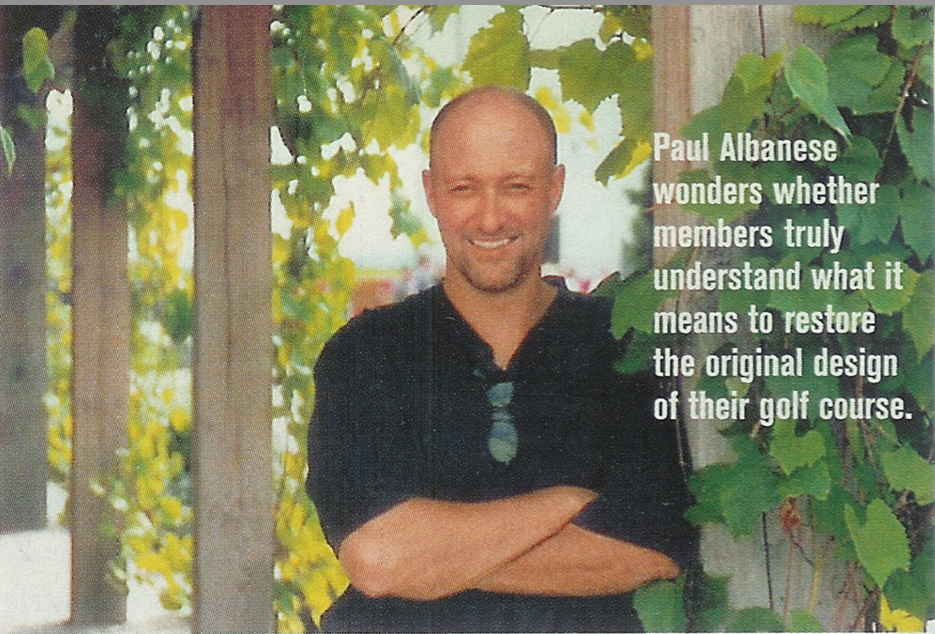
TOPIC: Paul Albanese discusses the process of restoring classic golf courses
“I’ve been designing and remodeling golf courses for a long time, so when I visit a private club, I often hear, “we want to restore the golf course to its original design.”
Typically, thc golf course was designed in the 19105 or 19205 by an architect that’s now gaining modern-clay recognition for being a “master architect.” Designers such as Donald Ross, Perry Maxwell and AW Tillinghast all designed courses in the early part of the century, and many of those courses have stood the test of time. But do members truly understand what it means to “restore” the original design of their golf course? Or do they really desire something else?
I find it ironic that, in one breath, club members will tout their course as a “wonderful, unadulterated classic Donald Ross” design and, in the next breath, say, “We love our beautiful tree-lined golf course,” What most club members don’t understand is that the tree-lined design of their present—day golf course is antithetical to its classic design origins. More often than not, through years of well—meaning “beautification” committees, most of the original design features have been obscured. So, although there is genuine desire to restore the original design, there is little understanding of the reality behind its implementation.
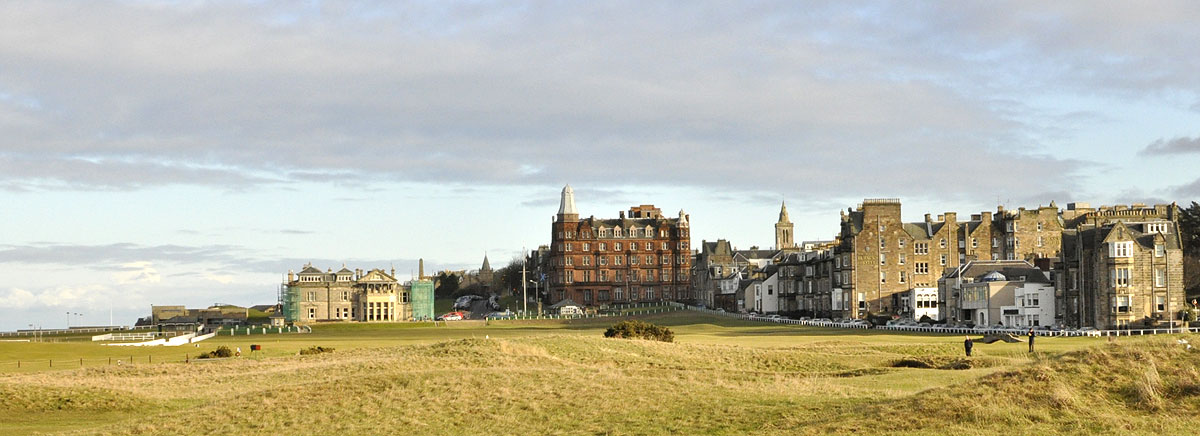
This is usually the point when I arrive with old aerial photographs clearly showing the “original” course. At this time there is always a look of surprise on the faces of the leaders, as they did not realize what the original golf course had — or didn’t have. Most of the courses built in the first quarter of the 20th century were designed Without trees being contemplated as integral pieces of the design. Old aerial pho
tographs of classic courses clearly show significantly fewer trees than their modern-day counterpart. Subsequently, I Will usually state, “If you truly want to restore the original design, you better have a lot of Chainsaws.”
In addition to trees, many of the bunkers designed on classic venues were placed to account for golf balls that only flew fractional distances compared to today’s supercharged pellets. Therefore, unless a club forbids the use of modern equipment, many of its original bunkers, if restored, will have no strategic value.
This is usually When the epiphany by the club occurs. When faced With What an actual restoration would entail, there is usually a compromise remodeling
idea created. I call this concept a brid restoration,” which entails studying the original design and integrating the style, form and strategy into a modern day golf context. The men designing courses in the 1920s had a great understanding for golf design and, through analyzing the forms and philosophies of the master architects, it becomes possible to complement their styles with the modern-golf landscapes.
Reconciling the classic style of a course with the modern—day context of golf is a process that takes education and patience. Once members understand the physical evolution of their course through historical documentation and gain an appreciation of the design philosophy employed by the original architect, a successful hybrid remodeling design can be created.
Here is the full article