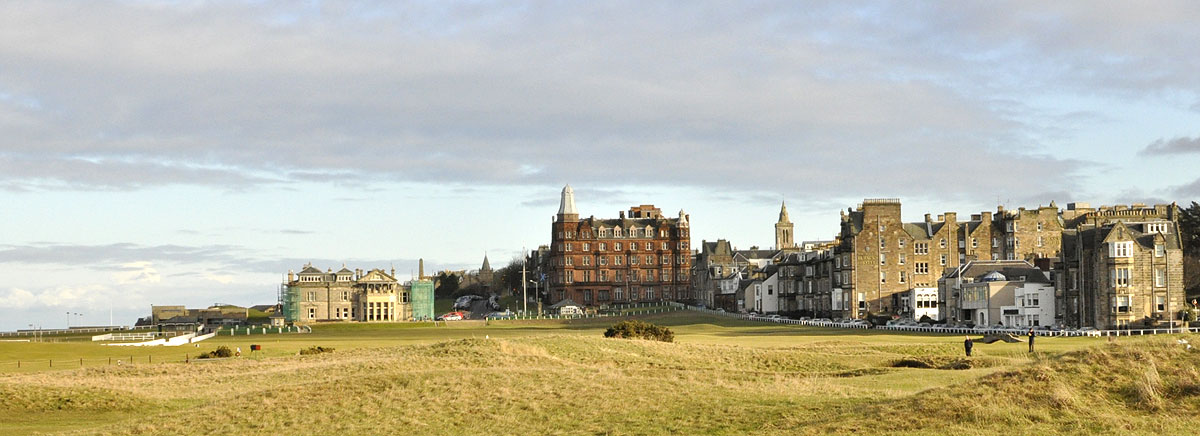
Led by Paul Albanese, ASGCA, our team will ensure the best possible golf course is created for every site by utilizing a comprehensive and complete Design Process – from site selection through top dressing the greens just before opening day.
 Paul Albanese has been trained as a landscape architects thoroughly grasps the essence of the architectural design development process. Paul has extensive construction experience, and also comprehend that being present in the field during construction is critical to ensuring all the details of a project are developed in the most cost-effective way.
The Albanese method incorporates a comprehensive planning process with full service management of on-site construction. This process has proven to work, and the benefits our clients have received are unparalleled.
The process used at Albanese is unique and comprehensive. We provide more service to our clients, because we know our method is the true way to create the best possible design for any site – just take a look at our award-winning projects.
The following are the benefits our clients receive via our process:
Prior to Construction
 Visualization: The Owners will be able to see precisely how the project will appear in the landscape. This visualization is critical to being able for making thoughtful and rational decisions about the project.
Cost Control: The Owners will clearly understand the cost ramifications of all project elements. Through our Design Process, the architects and construction managers will precisely detail all of the cost elements a project will incur.
During Construction
Construction Management : The Owners will have a member of the architectural team implementing the plans on-site. We can employ a full-time construction manager who will live on location to ensure all the details of the design are created as per the vision of the Architect and Owner.
Cost Control: Similar to the design phase, through our construction management process, we are able to save Owners substantial amounts of money during the construction phase. We work with the highest quality contractors and personnel in the golf industry to ensure the highest quality product is created by the most economical means.
HOW WE GO ABOUT THE PROCESS
PHASE I: Pre-Planning
Goals and Objectives Meeting: Before pencils hit the paper, we work with the Owner to gain a clear understanding of the goals and objectives of the project. We will tour the proposed site and/or sites on which the proposed project is contemplated. During this phase, we will outline the schedule of events and tasks needed to create a successful project.
Feasibility Consultation: We will collaborate with the Owner to develop a market analysis and financial “picture” for the proposed project. This involves assisting the Owner in obtaining a Market Analysis, Feasibility Study, and other economic data necessary for making informed decisions. We partner with top consultants in the golf industry to customize the business and financial plans to suit the specific project.
Base Plan Preparation: The following pieces of information are needed to ensure proper planning and design. We will collaborate with the Owner to gather this information and input it into our computer systems.
1. Aerial photographs 1″ = 100′ or 1″ = 200′
2. Topographic mapping 1″=100′ with a contour interval of 1 ft or 2 ft
3. Graphic property boundary survey 1″ = 100′
4. Survey showing existing utilities, easements and ROWS
5. Wetland boundary survey 1″ = 100′
6. Floodplain survey 1″ = 100′
7. Endangered of historical features 1″= 100′
8. Other applicable mapping
9. Engineering soil borings identifying topsoil type & amount , subsoil conditions, water table, well etc.
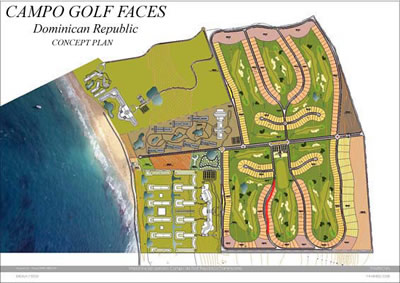
Concept Plan: Not always necessary, this plan is a conceptual sketch that allows the Owner to understand whether the overall project aligns with the project guidelines. The Concept Plan will show a general spatial analysis involving all proposed land uses. The plan is often used as a valuable tool when presenting the idea to potential investor groups, financial institutions or permitting agencies.
Preliminary Cost Estimate: This will be an approximation of construction expenses that will shape the overall project budget. Each estimate category will be clearly defined and quantified.
PHASE II: Planning and Design
Inventory and Analysis Plans: Critical to creating the best design for a site, a thorough understanding of the site is necessary. The following are the different analyses that will be completed:
- Topography or Terrain Modeling
- Vegetation
- Soils
- Opportunities & Constraints
- Environmental and Engineering consultants’ wetland, floodplain, easements, zoning, soil borings, and other applicable mapping. (Review only)
Schematic Land Use Plans: This is the “brainstorming” phase of the process, where we work until we, along with the Owners, are convinced that the best idea has emerged. During this phase, we will work with all the consultants involved to ensure all possible ideas are put on the table. We will organize design meetings and brainstorming sessions (called charettes) that will allow all parties an opportunity to be involved with the process. Subsequently, in our design studio, we will develop a range of alternatives for maximizing the site’s potential. This will include the following:
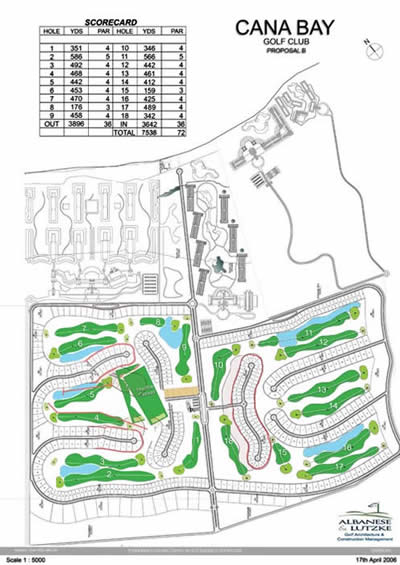
- Layout of the golf course
- Entrance road, parking, maintenance and clubhouse areas. (To be reviewed by the Owner’s clubhouse architect and engineer.)
- Conceptual layout of residential, commercial or other developments, if applicable. The land planner or engineer will review and refine these concepts as they relate to their respective locations and alignment to the golf course.
- These plans will be presented to the Owner and the consultants for review and discussion.
Master Plan: After reviewing all the ideas, we will develop them into a comprehensive Master Plan, which will serve as the foundation for the project. The Master Plan is a crucial tool for any developer and essential for the success of a new golf development or remodeling an existing one. Once the Master Plan is completed, another group meeting with all consultants will occur to ensure all goals and objectives are being met.
The following is provided during this phase:
- An illustrative, complete color rendering of the entire project at a scale of 1″ = 200′.
- A preliminary range of construction costs for the proposed golf course.
- Detailed, multiple tee scorecard for the golf course.
- Preliminary cross-sections of each hole.
Cost Estimate: Once the Master Plan is completed, a detailed cost estimate will be created that delineates the specific costs for each phase of the project.
PHASE III: Design Development
Investor Presentations: We will assist the Owner in making presentations to potential financial investor groups or committees interested in the project. We will personally deliver presentations and/or tours to groups or individuals around the property, verbally explaining the vision of the Master Plan to committees interested in the project. We will personally give presentations and/or tours to groups or individuals around the property, verbally describing the vision of the Master Plan.
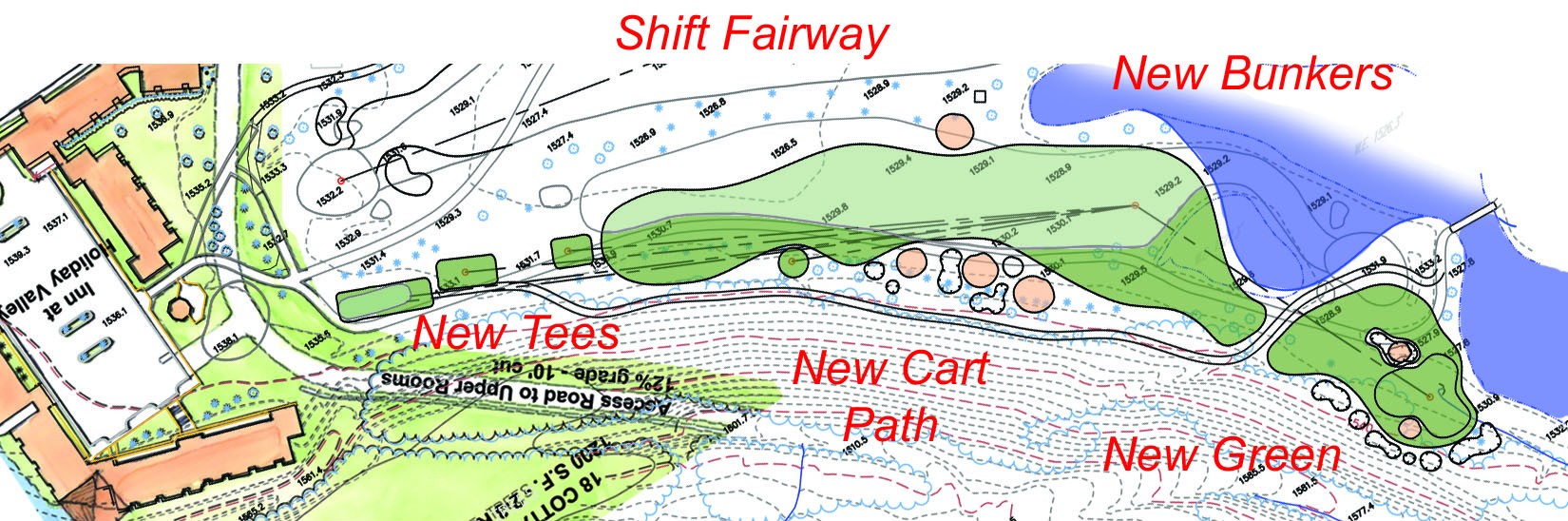
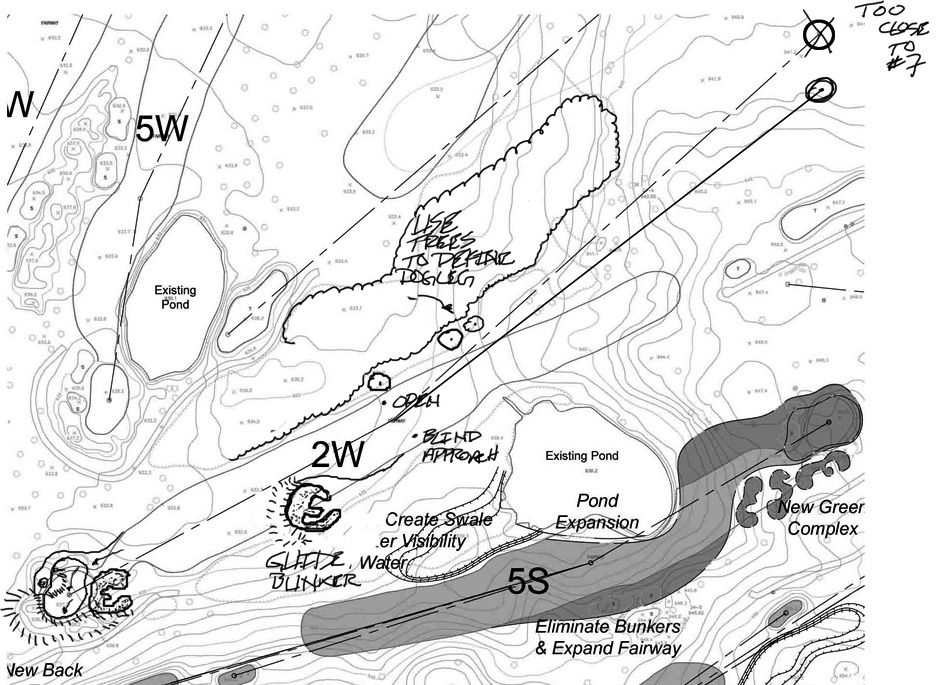
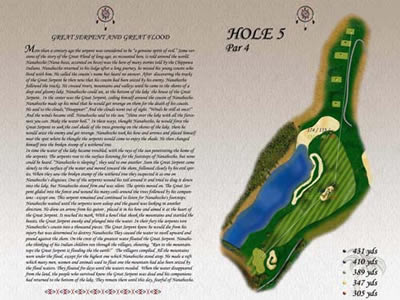
Design Development Drawings: Refining every aspect of the project’s design is essential for keeping it within budget and on schedule. We will create large-scale drawings for each golf hole, illustrating how each will be played strategically and built efficiently. For every hole, we will finalize detailed designs for the greens, tees, fairways, sand bunkers, water hazards, tree plantings, and other aesthetic features needed to make each hole unique and memorable.
Preliminary Grading and Irrigation Plan: Typically, the two largest costs in a golf course construction project are grading and irrigation. We aim to design golf courses that reduce the need for extensive earthmoving and excessive water use. Therefore, before starting the regulatory process, we will create an initial grading and irrigation plan that outlines the main areas to be cut and filled, as well as the estimated water requirements for the project.
Permitting Assistance: We will help the Owner obtain all necessary permits to develop the golf course. Permitting has become a highly specialized area, and securing these permits often requires a detailed understanding of the golf Design Process. Our relationships and expertise in this field have earned our firm a strong reputation in the regulatory community.
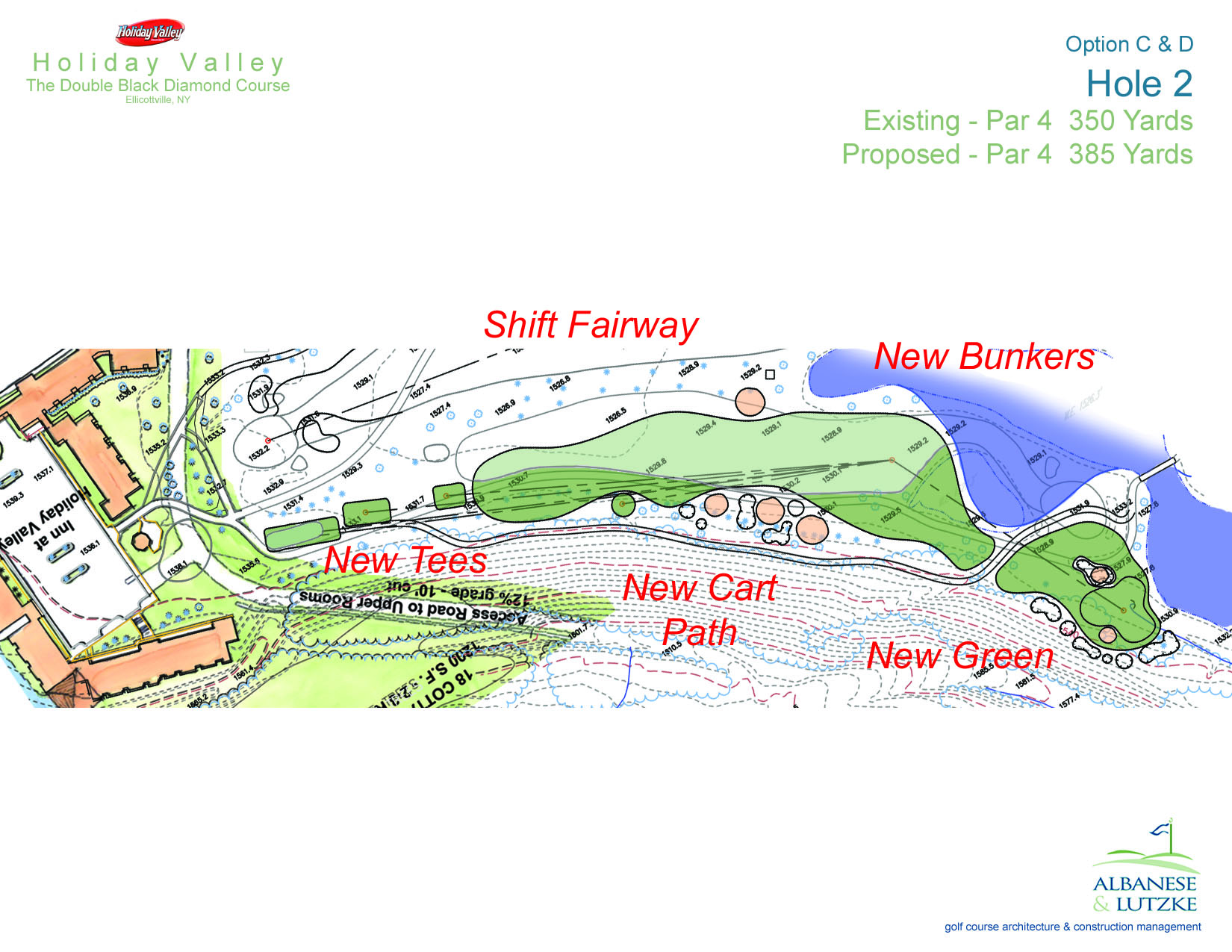 Construction Drawings: To make the project constructible in a cost-effective way, detailed drawings and specifications are created for the golf course. These documents accurately describe what contractors need to know to build the project. Depending on the project, the following are the drawings that may be produced.
1. Staking Plans at 1″ = 200′: This plan shows the precise locations of the greens, tees and landing areas that are to be clearly staked in the field.
2. Site Plan at 1″ = 200′
3. Clearing and Thinning Plans at 1″ = 200′: This plan precisely shows the different areas of the property that need to be cleared, thinned and grubbed for the golf course. The specific specimen trees that are to remain will be indicated and clearly marked to be saved.
4. Soil Erosion and Storm Drainage Plan: This is the responsibility of the Owner’s Engineer or Environmental Consultant. We will consult on this plan on an hourly basis if requested.
5. Grading Plans at 1″ = 100′ or 1″ = 50′: This plan will indicate the existing and proposed grades for the project using contour lines and spot elevations. The grades will be indicated to the nearest tenth of a foot and will show the detailed proposed grading for all features including fairways, tees, roughs, sand bunkers, grass depressions and other features. Great care will be taken to ensure that the proposed grading integrates and utilizes the natural terrain on site.
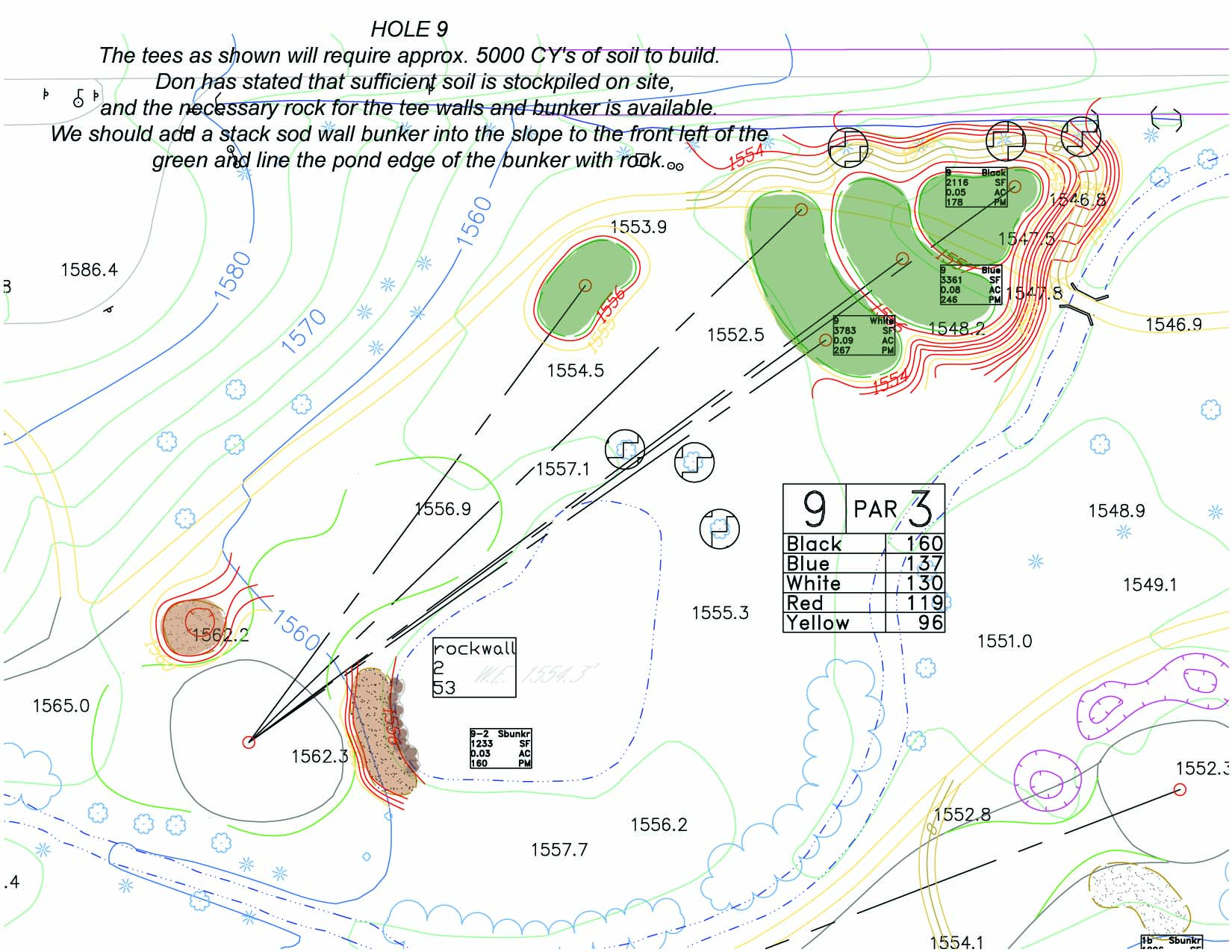
6. Tee Plans at 1″ = 50′: These plans show the specific elevations, slopes, and grassing details for all the tees including the practice tee.
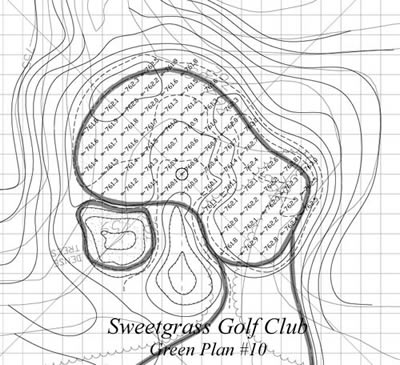
7. Green Plans at 1″ = 20′: These plans show the specific elevations, slopes and grassing details for all of the greens including the practice greens. The grades for the green surfaces are shown every 10 feet.
8. Irrigation, Pump Station & Well Plans: This plan will show the detailed design for the irrigation of the golf course.
9. Grassing Plans: These drawings will show the locations of all the grass species and varieties to be planted on the golf course.
10. Golf Course Circulation Plans: This drawing will show the proposed circulation of the cart paths, bridges and boardwalks. This plan needs to be reviewed, finalized and approved by the Owner’s engineer.
11. Golf Course Landscape Plan: This drawing will show the proposed locations for specific varieties of deciduous and coniferous tree species. This plan will also indicate any wetland planting areas and planting beds. This plan does not include clubhouse, parking & entrance areas.
12. Main Line and Storm Drainage Plan: This plan is the responsibility of the Owner’s engineer and should include all controlled outlets off the site. RHPAGD will review and design the golf course drainage plan to tie into this plan.
13. Golf Course Drainage Plan: This plan will show the drainage system for the golf course only. The mainline trunk line for this network is to be designed, sized and sealed by the Owner’s engineer along with a storm water management system.
Construction Specifications: This booklet verbally describes the materials and requirements for the work to be done. It will serve as the basis of a contract between the Owner and the Contractor.
Refined Cost Estimate: Using the construction drawings as a base, we will quantify the entire project and create a detailed estimate of construction costs. These costs will be analyzed to ensure the project stays within the proposed budget and time frame.
PHASE IV: CONSTRUCTION
Bidding and Contract Assistance: Finding the right people to build a golf course is critical to success. Golf course construction is a very specialized field, and we work hard to find the best people to complete the jobs needed. We organize pre-bid meetings with all potential Contractors, during which we clarify the project and address any questions they may have. Once bids are received, we will compile and analyze all of the bids received in a comprehensive spreadsheet. If necessary, we will then work with the Owner in negotiating the contract with the selected contractors.
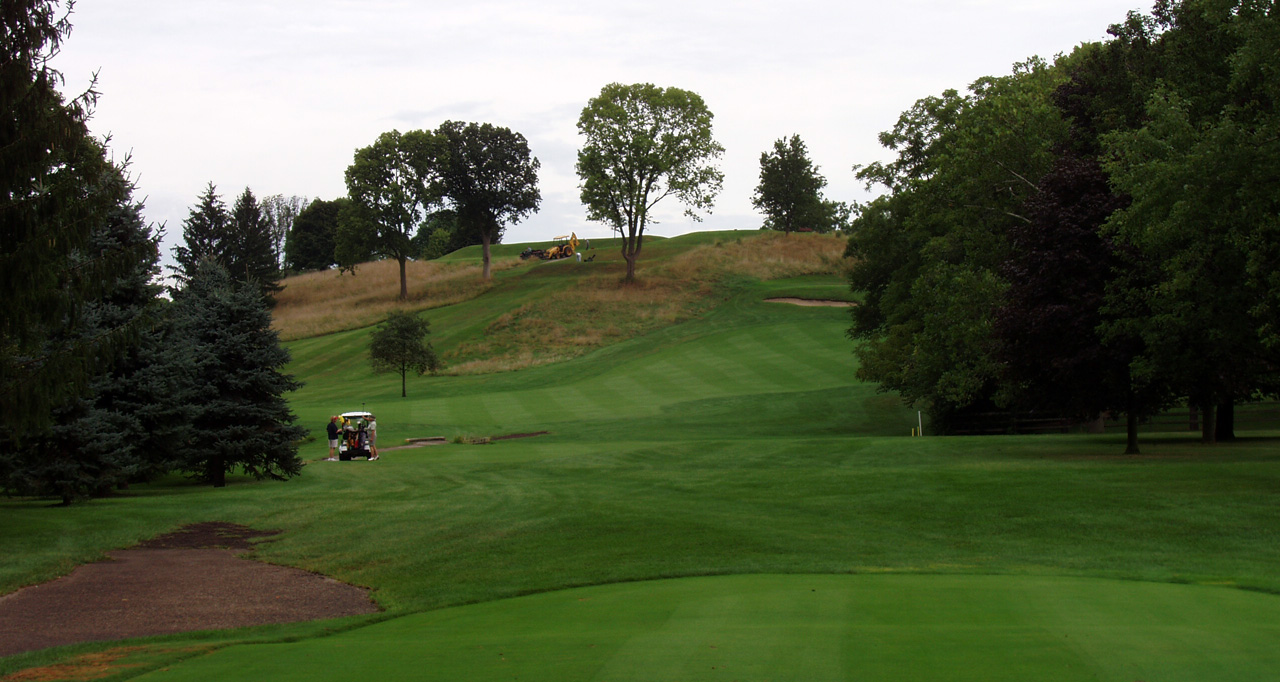
Construction Evaluation: Being present in the field during construction is essential to ensure the “final brush strokes” are applied, elevating the golf course from merely good to exceptional. If desired, our service offers the client an experienced designer onsite from the start to the completion of construction, ensuring all fine-tuning and details are executed according to the project’s vision. Our services also include approving approximate percentages of work completed for payment requests, reviewing and commenting on any change orders or requests made by the contractor during construction. Specifically, we will provide the following:
1. On site Owner representation or numerous site visits depending on the stage and pace of construction.
2. Review of Contractor’s payment request related specifically to quality and amount of work completed relevant to each payment request. The Owner’s representative or attorney shall be responsible for all other specifics related to the payment requests.
3. Detailed site visit report subsequent to each visit and copied to the Contractor and related consultants.
4. Final inspection walk through and punch list preparation for the owner and contractor to complete the project.
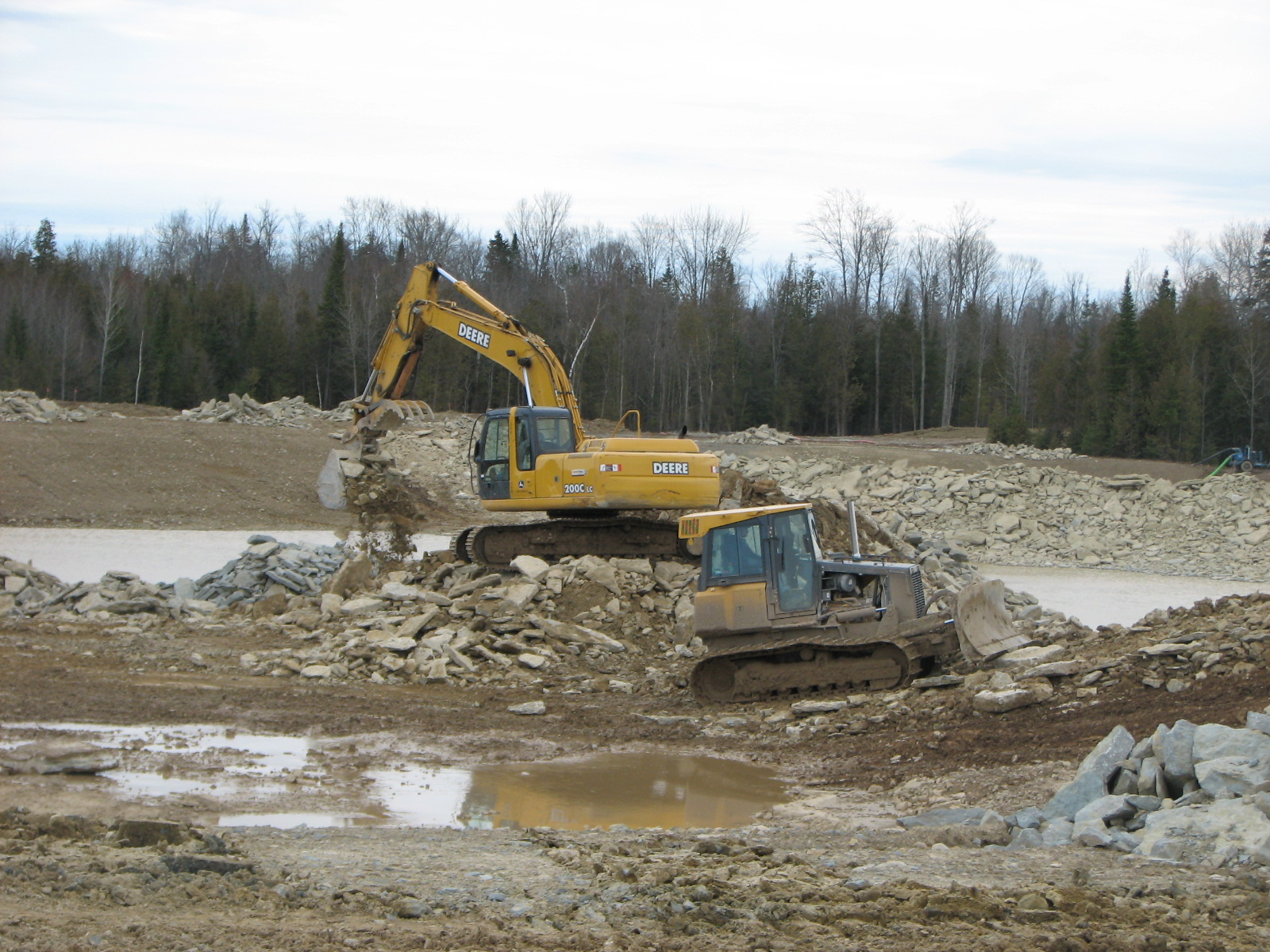
Construction Management: Albanese can provide either full-time or part-time construction managers who will ensure the project is completed on time and within budget. These managers will direct and oversee on-site personnel, coordinate the delivery of materials, and manage the scheduling of subcontractors and specialized trades needed to finish the project.
Grow-in Services: “You only get one chance to make a first impression,” so establishing turf on a golf course is becoming increasingly important for success. We will provide the Owner with a comprehensive grow-in program that will allow them to ensure the golf course opens on time and looks as if it has been there for years.
PHASE V: POST-CONSTRUCTION
Photography: Our professional photographers, utilizing state of the art equipment, will be able to produce photographs of the final product that will be used as the centerpiece for the clients marketing materials. We understand the vision behind the project, and we expound on this through the creative use of photography.
Marketing Materials : Our graphics team will create high quality marketing materials based on the final design of the project. This will include yardage books and other printed and digital images that are needed to ensure the best possible marketing campaign is ignited.
Public Relations Assistance: We will work closely with the client to ensure the project receives the deserved attention from the golf and travel media. We will ensure the proper team is in place so that the hard work done to date is recognized.