PUBLICATION: ON COURSE LIVING, February 2005
TOPIC: Interview with Paul Albanese about Golf Design and Housing
On the Tee: Paul Albanese
An Interview With PAUL ALBANESE
Paul Albanese is a golf course architect with over 12 years of experience designing golf communities. His is the found er of Albanese Golf Architecture & Construction Management an award-winning golf course architecture and construction management firm that is completing work throughout the United States and Canada. His views on how a golf course can be integrated into a golf community reflect his appreciation for the game’s traditions and the requirements of the both modern golfers and homeowners.
As a course architect, what surprises you about golf communities?
I am always impressed by the growing number of people that live in golf communities that do not play golf. This is an indication that non-golfers appreciate the landscapes of golf as much as golfers do, even if that landscape was not specifically designed with them in mind. Golf courses can, and should, be designed for the enjoyment of all members of the community.
Has that revelation influenced your approach to designing golf courses for communities?
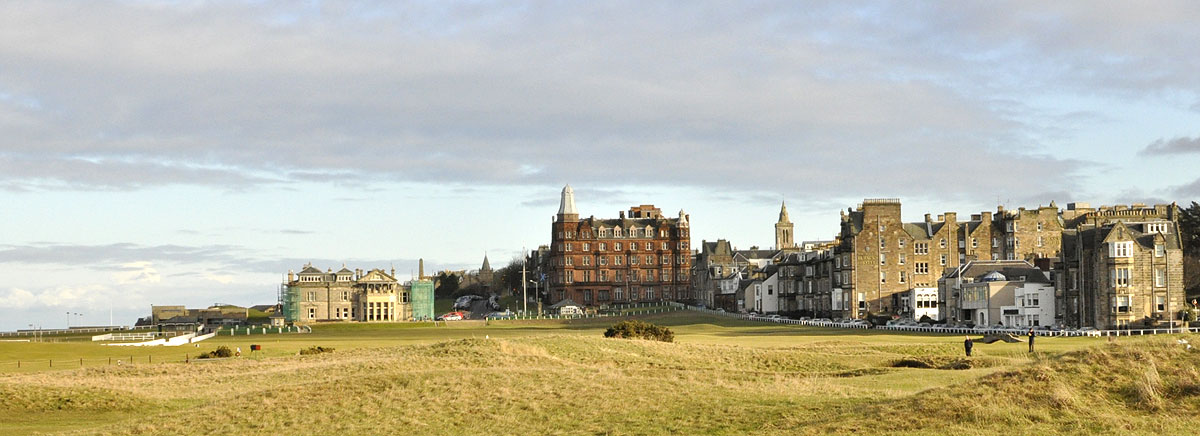
Definitely, and why not? The home of golf, St. Andrews in Scotland, is a wonderful example of how a community and its courses can be integrated for the betterment of everyone. On its links there’s a good chance that you’ll share your round with people walking dogs or families out for a stroll. On more than one occasion I’ve had to wait as people crossed the golf course to get to the beach. As opposed to feeling inconvenienced, I acknowledged that I was in a community where the course had more than one purpose: It was an open space where the entire community felt welcome.
Is that possible in the modern golf community?
There is nothing that precludes a contemporary golf-housing development in the U.S. from implementing a similar design. Whenever I lay out such a golf course, my goal is to call upon the integrated designs of Scotland. My objective is to allow the non-golfer to experience the creative forms and features along with their golfing neighbors. And, I have noticed that when these integrative design strategies are implemented, the entire development feels more like a unified whole, versus a disjointed conglomeration of parts.
What are the elements of such an integrated design?
To manifest a genuine feeling of integration, I try to incorporate three general concepts into the design. First, there must be “windows” into the golf course. As opposed to shielding the layout from non-golfers, as is commonly done with shrubs and fences, these intentionally designed vantage points let non-golfers appreciate the forms and features of the design as much as golfers do.
When designed correctly, these “windows” do not interfere with golfers who need privacy when hitting shots. In fact, they often enhance the golfers’ experiences, providing them with a view of the community from a different perspective. One of the best examples of a “window” is at St. Andrews where bystanders near the starting and finishing holes see the course laid out before them while players finishing a round see a panorama of the town’s historic buildings.
Is a path across a golf course sensible?
A path that crosses a fairway doesn’t bode well in today’s litigious world, so I look for places where non-golfers can be safely interconnect without infringing on “action” spots. I try to meld paths on the course so that they can be used by both golfers and non-golfers because when the two groups interact at the right place, there is a sense of shared space that reinforces the notion that the course is an integral part of the community.
This approach may lead to bike paths or walking trails that are joined with cart avenues in locations where golfers go from green to tee. Also, there are many instances where golfers need to travel through wetland areas via boardwalks, and these are opportune places for integration.
What else can be done to establish this harmony?
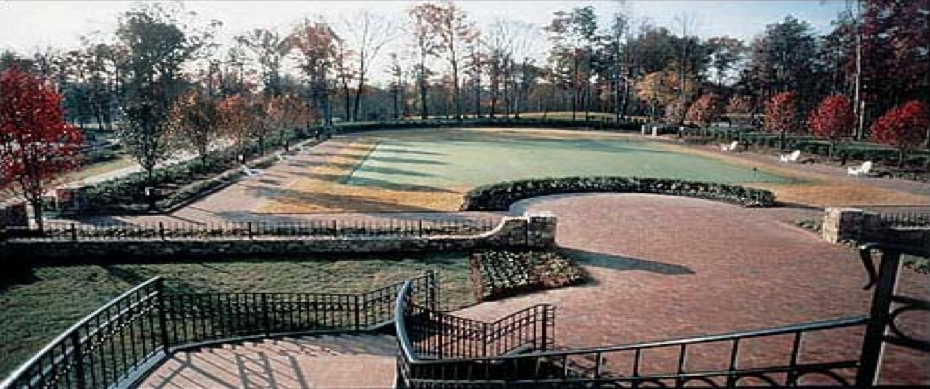
In addition to creating windows and integrating pathways, I often design common space for golfers and non-golfers. This isn’t easy, but creating space within the course for non-golfers’ use creates a strong bond between the golf landscape and the community.
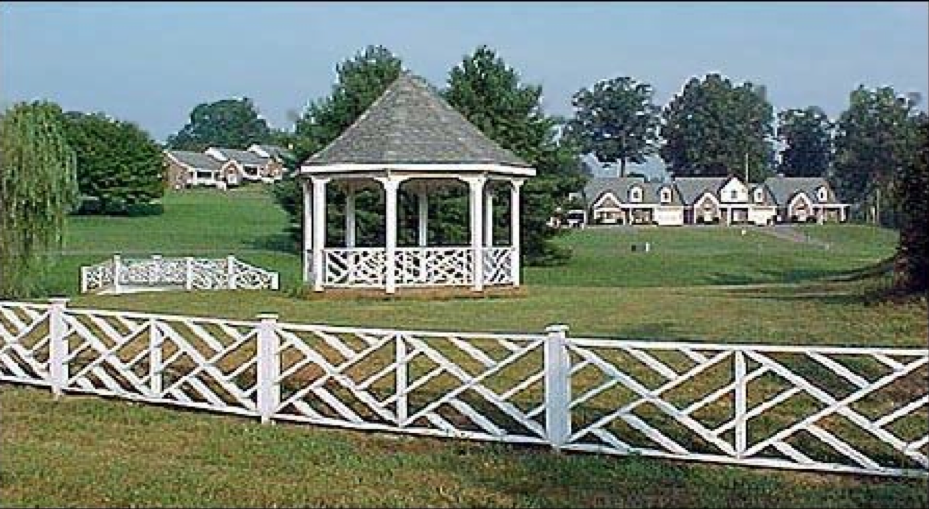
These areas of common ground may be simple gazebos or pocket parks with benches. Designed in conjunction with the golf course, they allow non-golfers to safely, conveniently, and happily use land that had all too often been off limits. Wetlands can be the most beautiful piece of a golf landscape, and finding ways for the whole community to interact with this ecology, in conjunction with the golfer, is exceptionally rewarding.
So there needn’t be tension between homes and golf courses in a residential community?
Not at all. By creating windows, integrating pathways, and developing shared space, the entire community can appreciate the golf course, even those who are still mystified as to why we golfers are so determined to hit that little pellet into a 4-inch hole. Many of the most beautiful, enriching and inspiring spaces in a community are located on the golf course, and with a bit of thought, they can be enjoyed by everyone.
About Paul Albanese
Mr. Albanese is a member of the American Society of Golf Course Architects and holds a Masters Degree in Landscape Architecture from Harvard University and an Environmental Engineering degree from Cornell University.
For more information, visit the Albanese Golf Architecture & Construction Management’s website at www.Golf-Designs.com, send an e-mail, or telephone (248) 435 0142.
Here’s the full article: